Wildlife at Kingfisher

To the south of the dividing stream we have the apartments, the Clubhouse, the children’s play area, the outdoor swimming pool, the barbecue area and all the facilities that make for the ideal holiday. To the north of this stream, lie sixty-five acres of some of England’s most lovely countryside.
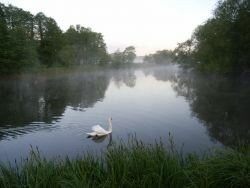
The Kingfisher site truly is a haven of lakes, river and unspoilt valley. The area has been in the hands of the Roger’s family now for generations and the care and love that they have bestowed on this precious area is now clear for all to see.

The trees are especially magnificent, the sweeping willows an exciting example. There are wildflowers everywhere and extensive reed beds. Bird life, as a result, is rich and varied. Cuckoos, tits, warblers, woodpeckers, owls and buzzards mingle with an astonishing variety of water fowl. We’re proud of our large head of kingfishers, our grebes, swans, geese and ducks of all varieties.

Deer visit the area to drink in the evening. There’s always a chance of seeing fox and badger and the site is particularly famous for the frequent appearance of wild otters. The Wensum valley is a noted thoroughfare for these charming animals and the plethora of fish at Kingfishers means many of them stop off on their wanderings.

Whatever the season, Kingfishers presents wonderful wildlife possibilities. Enjoy the well-planned walks around the lakes. Learn from the colourful information boards and complete the free family quiz sheets that we offer in our hospitality packs. This is the perfect place to walk, learn and relax.

And don’t forget, if wildlife is your passion, it’s also ours. And there are plenty more venues for you to visit in the area. The internationally famous Pensthorpe Wild Fowl Centre is a mere ten minutes up the Fakenham Road. The Broadland Reserves are little more than forty minutes away. The Cley Reserve – in the top five of bird-watching areas in the UK – is a mere thirty-five minutes. And don’t forget you can use your Kingfisher Credit Card for purchases made at Cley Spy, the nationally famous centre for binoculars, bird scopes and outdoor accessories.

So welcome to Kingfisher’s Sanctuary. Watch the wildlife. Soak in the serenity. Feel yourself relax back into nature.

See you there,

Welcome To The Kingfisher Wildlife Diaries – John Bailey

February 1st 2010

All Systems Go

Right, winter is on the wane and at Kingfishers we are absolutely determined to crack on with the conservation area to the north of the apartments. We have loads of initiatives in mind that will totally transform the sixty-five acres of river and lake wetland over the next months and years. What we're aiming to do is provide a true sanctuary for both wildlife and our visitors. And we also want to promote the concept that conservation and angling can co-exist in perfect harmony. All good anglers are naturalists at heart so there is no real conflict of interest. Of course, we'll be taking lots of advice from all sorts of people in the months to come and through this column we will detail exactly the progress we're making and the thought processes behind all our initiatives. We've got a lot to learn, of course, and don't hesitate to email in if you think we are getting it wrong or what we are doing could be improved.

I'm actually at my study now looking out of my window towards the bleak North Norfolk coast. There are two absolutely fabulous cock pheasants rummaging around under my quince tree. Evidently the rotting fruit there are much to their taste. I don't know what you think about pheasants. An alien species of course. Introduced for shooting, too. But for me, these glorious splashes of colour lift an otherwise bleak, grey afternoon. If they stay in my garden, I guess they'll be safe for another year and bring me hours of viewing pleasure.

January 18th 2010

Bump in the Night

A Southern Indian jungle. My team and I are having supper. Bola, head guide appears. Elephants he says. Just yards from where we are sitting. Quietly, without any light, we make our way towards the thick scrub. Bola stops us and we listen. Just ten yards away the animals are moving, a tribe, Bola says, of around fifteen beasts. We squat low to see their massive shapes against the dark night sky. You can hear their dung falling on the sun-baked earth. Hear their tails swish. The occasional muffled trumpet as the creatures clash over a particularly succulent bush.

Their progress is slow for they are feeding hard. Trees are torn down. Bushes pulverised. The tension is palpable. I look at my companions and see their faces tight with excitement, etched with awe. To be so close, to be such a part of this nocturnal feast.

After twenty minutes, we sense the creatures are drawing away from us, disappearing into the night jungle. Then, they are gone. We return wonderingly, to our meal, in almost total silence, each of us lost in our thoughts.

The members of the team were predominantly in India for the fishing but, it's important to remember that most fishermen are dedicated naturalists, too.  And what wildlife there is still down on the subcontinent. I honestly saw a leopard pass through my binoculars' field of vision. Wild boar. Monkeys. Crocs. Endless species of deer. Buffalo. Jungle cats. A mongoose or two. Snakes. A scorpion and more species of birds than you could begin to count.

But I'm still looking forward to Norfolk as it comes out of this winter freeze. Walks along the Wensum and around the Kingfisher Lakes. Holkham beach. The marshes at Cley and Salthouse. What an incredibly rich world this is.

January 1st 2010

Frozen Winters

Well, global warming might be a given but this holiday period has certainly reminded us all of the harsh winters in the past. Indeed, as one of my pals said, if it weren't for global warming we'd have all frozen to death this Christmas!

I remember well one of the most terrifying winters up on the North Norfolk coast when I was just a kid. Even then, I was fascinated by fishing and by wildlife both and it was pitiful in the weeks and weeks of sub-zero temperatures to watch the effect of the cold on the birds of the surrounding marshes.

Small waders became so weak that they were easy prey for the hooded crows and gulls. Brent geese became completely fearless and as the marshes remained frozen, most of the moorhens began to die of hunger. Bitterns and herons perished and water rails were amongst the first to succumb to the cold - fifteen were found dead where the river entered the sea. Amongst the reeds water rails were seen attacking starving dunlin and even feeding on the corpse of a coypu - animals that were quite common in those days. Wrens were frozen to death on the very coldest of nights and only those that huddled together in large numbers survived. Forty wrens roosted in a single nesting box in the wood near my parents' house.

The gardens in the village were invaded by a huge number of redwings, fieldfares and blackbirds. Many of them existed on spoiled apples left over from what had been a bumper harvest the previous autumn. A kestrel was seen attacking a woodcock in flight and a water rail which had swooned in a coma was found to have its belly feathers encased in ice. The bird was thawed out and fed on worms. One of the keepers found three half-starved bitterns which he cared for in a pen feeding them mainly on sprats. He saw a dying mute swan killed and devoured by a fox. He also spread hundred weights of apples in his garden and kept alive blackbirds, song thrushes, fieldfares, redwings, bramblings and tits.

As I write, the thaw is well underway and it looks like our birdlife is not going to suffer like it did all those years ago. Let's hope not.

» Wildlife Diary Archives